Finding qualified commercial electrical contractors near me has become increasingly critical as businesses face growing electrical infrastructure demands in 2026. Whether you're planning a facility expansion, upgrading aging systems, or implementing energy-efficient solutions, selecting the right electrical partner determines project success, safety compliance, and long-term operational reliability. This guide walks you through everything you need to evaluate contractors, understand pricing structures, and make informed decisions for your commercial electrical needs.
Understanding Commercial Electrical Contractor Services
Commercial electrical contractors deliver specialized services that differ significantly from residential work. These professionals handle complex systems involving three-phase power, high-voltage equipment, and industrial-grade installations that require advanced technical expertise and regulatory knowledge.
Core Service Categories
When searching for commercial electrical contractors near me, you'll encounter firms offering distinct service tiers. Design-build contractors manage projects from initial electrical engineering through final installation, streamlining coordination and accountability. Maintenance specialists focus on preventive care, testing, and repairs for existing systems. Emergency response teams provide 24/7 support for critical infrastructure failures.
The scope typically includes:
- Commercial lighting design and installation
- Power distribution systems and panels
- Backup generator integration
- Fire alarm and security system wiring
- Data center electrical infrastructure
- Industrial machinery power supplies
- Energy management system integration

Industrial vs. Commercial Applications
Industrial electrical work demands higher voltage capacity and specialized equipment knowledge. Facilities requiring transformers, switchgear, or medium-voltage solutions need contractors with proven experience in these systems. Many commercial electrical contractors near me specialize in either light commercial (offices, retail) or heavy industrial (manufacturing, processing plants) applications.
Light commercial projects typically involve 120/208V or 277/480V systems with straightforward distribution requirements. Industrial installations often require 4,160V to 13,800V medium-voltage systems, demanding contractors certified for high-voltage work and equipped with specialized diagnostic tools.
| Application Type | Typical Voltage | Common Projects | Complexity Level |
|---|---|---|---|
| Office Buildings | 120/208V | Lighting, outlets, HVAC | Moderate |
| Retail Spaces | 277/480V | Display lighting, POS systems | Moderate |
| Manufacturing | 480V – 4,160V | Machinery, production lines | High |
| Industrial Plants | 4,160V – 13,800V | Transformers, switchgear | Very High |
Evaluating Contractor Qualifications and Credentials
The licensing landscape for electrical contractors has evolved significantly, with recent National Electrical Code (NEC) changes introducing updated safety requirements that contractors must demonstrate mastery of through continuing education and certification.
Essential Certifications to Verify
Before engaging commercial electrical contractors near me, verify they hold current master electrician licenses in your jurisdiction. Many regions require separate certifications for medium-voltage work, fire alarm installation, or hazardous location wiring. Bonding and insurance protect your business from liability, with most commercial projects requiring minimum coverage of $2 million general liability and $1 million workers' compensation.
Professional affiliations signal commitment to industry standards. Look for membership in organizations that enforce ethical guidelines and require ongoing technical training. Contractors with NFPA 70E arc flash training certification demonstrate safety competence for energized electrical work.
Additionally, verify:
- State or provincial electrical contractor license (active, no violations)
- Local business permits and tax compliance
- OSHA safety training certifications
- Manufacturer certifications for specialized equipment
- Past project references in your industry sector
Experience in Your Industry
Commercial electrical contractors near me often specialize by vertical market. A contractor experienced in healthcare facilities understands critical power requirements, emergency systems, and infection control considerations that don't apply to warehouse projects. Similarly, data center contractors know redundant power paths, precision cooling integration, and clean power delivery that general contractors may lack.
Request case studies or site visits to completed projects matching your facility type. Ask specific technical questions about systems relevant to your needs. A qualified contractor readily explains their approach to challenges specific to your industry.
Project Scoping and Price Transparency
Understanding how commercial electrical contractors near me structure pricing helps you budget accurately and compare proposals effectively. Electrical project costs vary based on labor rates, material specifications, project complexity, and timeline constraints.
Common Pricing Models
Time-and-materials pricing bills actual hours worked plus materials at cost with a markup percentage (typically 15-30%). This model suits projects with uncertain scope or evolving requirements but can lead to budget overruns without careful monitoring.
Fixed-price contracts establish a total project cost upfront based on detailed specifications. Contractors assume risk for cost overruns, creating incentive for efficient project management. This works best for well-defined scopes with complete design documents.
Unit pricing applies set rates per installation unit (per fixture, per circuit, per panel). It provides predictability for repetitive work and simplifies change order pricing.
| Pricing Model | Best For | Risk Distribution | Budget Certainty |
|---|---|---|---|
| Time & Materials | Undefined scope, renovations | Client bears risk | Low |
| Fixed Price | New construction, clear specs | Contractor bears risk | High |
| Unit Pricing | Repetitive installations | Shared risk | Medium-High |
| Cost-Plus | Complex, evolving projects | Shared risk | Medium |
Hidden Costs to Anticipate
When comparing bids from commercial electrical contractors near me, identify what's excluded from base pricing. Permit fees often appear as separate line items. Engineering and stamped drawings may require additional charges if not included. After-hours work typically carries premium rates of 50-100% above standard labor.
Equipment rental, scaffolding, or lift requirements add costs beyond basic labor and materials. Some contractors charge separately for project management, whereas others include supervision in overhead rates. Clarify warranty terms; extended warranties or maintenance contracts may cost extra but provide valuable long-term protection.

Vetting Process for Contractor Selection
A systematic evaluation process helps identify the most qualified commercial electrical contractors near me while avoiding costly mistakes. Begin your search well before project deadlines to allow thorough vetting.
Request for Proposal (RFP) Development
Create a detailed RFP documenting project requirements, site conditions, performance expectations, and submission requirements. Include electrical plans, specifications, and any relevant building codes or standards. Specify submission format and evaluation criteria so contractors provide comparable information.
Request breakdowns showing labor, materials, equipment, and overhead separately. Ask for project schedules with key milestones. Require safety plans and quality control procedures in writing.
The Small Business Administration’s contracting guidance offers templates and best practices for developing effective RFPs, particularly valuable for businesses new to commercial electrical procurement.
Reference Checking and Site Visits
Contact at least three references for each contractor under consideration. Ask specific questions about schedule performance, budget adherence, problem-solving capability, and post-project support. Inquire whether they would hire the contractor again without hesitation.
Visit active job sites if possible. Observe worksite organization, safety practices, and crew professionalism. Well-managed sites with clear safety protocols and organized material staging indicate contractors who execute projects systematically.
Financial Stability Assessment
Commercial electrical projects often span months with significant material purchases and labor commitments. Verify contractor financial stability to ensure they can complete your project without cash flow disruptions. Request financial statements for large projects. Check payment histories with suppliers and subcontractors.
Bonding capacity indicates financial strength; contractors capable of securing performance bonds demonstrate creditworthiness and asset backing. For projects exceeding $500,000, consider requiring payment and performance bonds protecting against contractor default.
Technology and Energy Efficiency Considerations
Modern commercial facilities demand electrical systems supporting advanced technology while minimizing energy consumption. Forward-thinking commercial electrical contractors near me integrate these capabilities into system design and installation.
Smart Building Integration
Building automation systems require electrical infrastructure supporting network connectivity, power over Ethernet (PoE), and integration with lighting controls, HVAC systems, and security platforms. Contractors experienced in structured cabling and low-voltage systems ensure proper coordination between power and data networks.
The U.S. Department of Energy’s commercial buildings resources provide guidance on integrating electrical systems with energy management and building automation platforms that reduce operating costs while improving occupant comfort.
LED lighting retrofits with networked controls deliver both energy savings and operational benefits. Quality contractors specify controls enabling daylight harvesting, occupancy sensing, and scheduling while ensuring proper dimming compatibility and flicker-free performance.
Power Quality and Renewable Integration
Sensitive electronic equipment requires clean, stable power delivery. Commercial electrical contractors near me with power quality expertise use monitoring equipment to identify harmonic distortion, voltage sags, and transient issues affecting equipment performance and longevity.
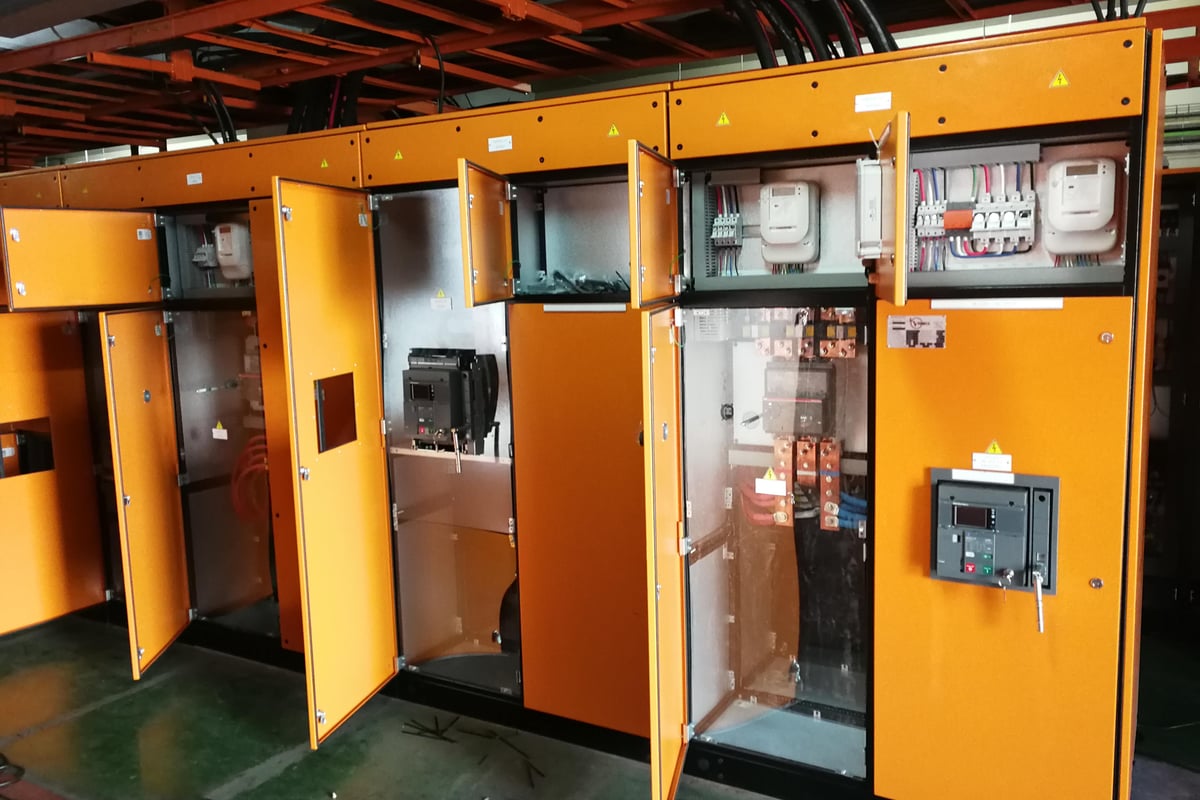
Solar installations and battery storage integration have become mainstream components of commercial electrical systems. Contractors experienced in photovoltaic systems understand interconnection requirements, utility coordination, and safety protocols for distributed generation. Medium-voltage switchgear and transformer maintenance expertise ensures reliable power distribution as facilities add renewable capacity and backup power systems.
For businesses investing in solar infrastructure, working with contractors who maintain medium-voltage equipment ensures seamless integration between grid power, renewable generation, and backup systems. Medium Voltage Switchgear and Transformers services from experienced providers help maintain system reliability as electrical infrastructure grows in complexity.
Safety Standards and Compliance Requirements
Regulatory compliance separates professional commercial electrical contractors near me from those cutting corners. Electrical code violations create liability exposure, insurance complications, and potential facility shutdowns during inspections.
Code Compliance and Permitting
National, regional, and local codes govern every aspect of commercial electrical installation. The National Electrical Safety Code (NESC) establishes utility-side requirements intersecting with large commercial projects, while the NEC governs building electrical systems.
Contractors must secure proper permits before beginning work and schedule required inspections at rough-in, service installation, and final completion stages. Work performed without permits creates title complications, insurance issues, and potential liability if safety problems arise later.
Professional contractors factor permit acquisition and inspection scheduling into project timelines, coordinating with electrical inspectors to avoid delays. They maintain inspection records documenting code compliance throughout the installation process.
Arc Flash and Workplace Safety
NFPA 70E standards require arc flash hazard analysis and appropriate safety procedures for work on energized equipment. Commercial electrical contractors near me working on medium-voltage systems must conduct arc flash studies, label equipment with incident energy levels, and train workers in proper personal protective equipment (PPE) selection and use.
Safety-conscious contractors implement comprehensive safety programs including:
- Regular toolbox talks and safety training
- Job hazard analysis for each project phase
- Lockout/tagout procedures for de-energization
- Fall protection for elevated work
- Confined space entry protocols
- Personal protective equipment requirements
Market Trends Affecting Contractor Selection
The commercial electrical contracting landscape continues evolving as industry trends reshape how projects are staffed, priced, and delivered. Understanding these dynamics helps businesses make informed contractor selections.
Labor Challenges and Project Timing
Skilled electrician shortages affect contractor capacity and pricing across most markets. Commercial electrical contractors near me often book work months in advance, making early contractor engagement essential for time-sensitive projects. Labor costs have risen 15-25% in many regions since 2023, with continued upward pressure expected through 2027.
Prefabrication and modular construction techniques help contractors stretch skilled labor further while accelerating project schedules. Contractors investing in prefabrication facilities demonstrate commitment to efficiency and quality control.
Material Supply Chain Considerations
Supply chain disruptions that peaked in 2021-2022 have moderated but not disappeared. Lead times for specialized equipment like switchgear, transformers, and custom panels still extend 12-20 weeks. Experienced commercial electrical contractors near me build these lead times into project schedules and identify alternative products when specifications allow substitutions.
Contractors with established supplier relationships often secure better pricing and priority allocation during shortages. Ask how contractors manage material procurement and what contingency plans exist if specified products become unavailable.
Regional Considerations for South African Businesses
Businesses operating in South Africa face unique electrical infrastructure considerations that inform contractor selection. The electrical grid's characteristics, local regulations, and regional expertise availability all impact project planning and execution.
Voltage Standards and Equipment Compatibility
South African commercial facilities typically operate on 400/230V three-phase power for general distribution, with 11kV or 22kV medium-voltage feeds for larger industrial operations. Commercial electrical contractors near me must demonstrate familiarity with SANS 10142-1 wiring code requirements and regional utility interconnection procedures.
Equipment sourcing considerations differ from other markets. Contractors with established relationships with local and international suppliers ensure component availability while managing import timelines and costs.
Load Shedding and Backup Power Requirements
Ongoing grid instability makes backup power essential for most commercial operations. Contractors experienced in generator integration, uninterruptible power supplies (UPS), and battery storage systems help businesses maintain operations during outages. Solar installations with battery backup provide both energy cost reduction and load shedding resilience.
The EPA’s Building Upgrade Manual offers principles for electrical system upgrades applicable to improving energy efficiency even as backup power capacity expands.
System design must account for seamless transition between grid power, backup generation, and renewable sources. Proper transfer switch selection, load prioritization, and generator sizing require contractors with deep technical expertise and local experience.
Maintaining Long-Term Contractor Relationships
The most successful commercial facility managers develop ongoing relationships with qualified commercial electrical contractors near me rather than rebidding every project. These partnerships deliver multiple benefits beyond individual project execution.
Preventive Maintenance Programs
Regular electrical system maintenance prevents costly failures, extends equipment life, and ensures continued code compliance. Contractors familiar with your facility work more efficiently during service calls and emergency responses. They understand your equipment, your operations, and your critical systems.
Structured maintenance agreements typically include:
- Annual infrared thermography scanning for hot spots
- Regular transformer oil testing and analysis
- Switchgear inspection and testing
- Ground resistance testing
- Emergency lighting and exit sign inspection
- Generator load bank testing and exercising
Capacity Planning and Future Expansion
Trusted contractors become advisors for long-term facility planning. They help forecast electrical capacity needs as operations grow, identify system bottlenecks before they become critical, and recommend proactive upgrades preventing costly emergency replacements.
This strategic partnership approach means contractors understand your business goals and can align electrical infrastructure investments with operational priorities. For comprehensive electrical solutions from design through ongoing maintenance, explore the full range of services available through ELECTRICAL4U(PTY)LTD.
Selecting qualified commercial electrical contractors near me requires systematic evaluation of credentials, experience, pricing transparency, and safety commitment. Businesses that invest time in thorough contractor vetting, develop clear project specifications, and build long-term partnerships position themselves for successful electrical infrastructure projects that support operational goals while ensuring safety and compliance. With over 20 years of specialized experience in low and medium-voltage solutions, transformers, switchgear, and solar installations, ELECTRICAL4U(PTY)LTD delivers the technical expertise and reliability South African businesses need for their commercial and industrial electrical projects.