Transformers represent critical infrastructure assets in electrical distribution networks, and their reliable operation directly impacts facility uptime, safety, and operational costs. When these essential components begin showing signs of degradation or failure, professional transformer repair services become indispensable for maintaining system integrity and avoiding catastrophic downtime. Whether serving industrial facilities, commercial complexes, or utility networks, understanding the scope, methodology, and strategic value of professional transformer repair can mean the difference between controlled maintenance and emergency shutdowns that cascade across entire operations.
Understanding Transformer Repair Service Scope
Transformer repair services encompass a comprehensive range of interventions designed to restore, upgrade, or extend the operational life of power distribution equipment. These services address everything from minor component replacements to complete system rebuilds following fault events.
Component-Level Repairs and Replacements
Professional repair technicians handle numerous component-specific interventions that restore transformer functionality without requiring complete unit replacement. Bushings frequently require attention due to moisture ingress, tracking damage, or mechanical stress, and qualified technicians can replace these components on-site or in workshop environments. Tap changer mechanisms-both on-load and de-energized types-demand specialized expertise for contact refurbishment, drive mechanism overhaul, and control circuit rehabilitation.
Cooling system repairs represent another critical service category. Radiator banks may require leak repair, fin straightening, or complete replacement to restore thermal capacity. Pump and fan motor assemblies need periodic rebuilding, with bearing replacement, winding testing, and seal renewal extending equipment service life. For oil-filled units, switchgear services often complement transformer work to ensure integrated system reliability.
Core and coil repairs demand the highest technical expertise:
- Winding reinsulation following thermal degradation
- Inter-turn fault correction through targeted section replacement
- Core lamination repair to eliminate hotspot formation
- Bushing turret welding and gasket surface restoration
- Internal connection tightening and high-resistance joint elimination
Diagnostic Testing and Condition Assessment
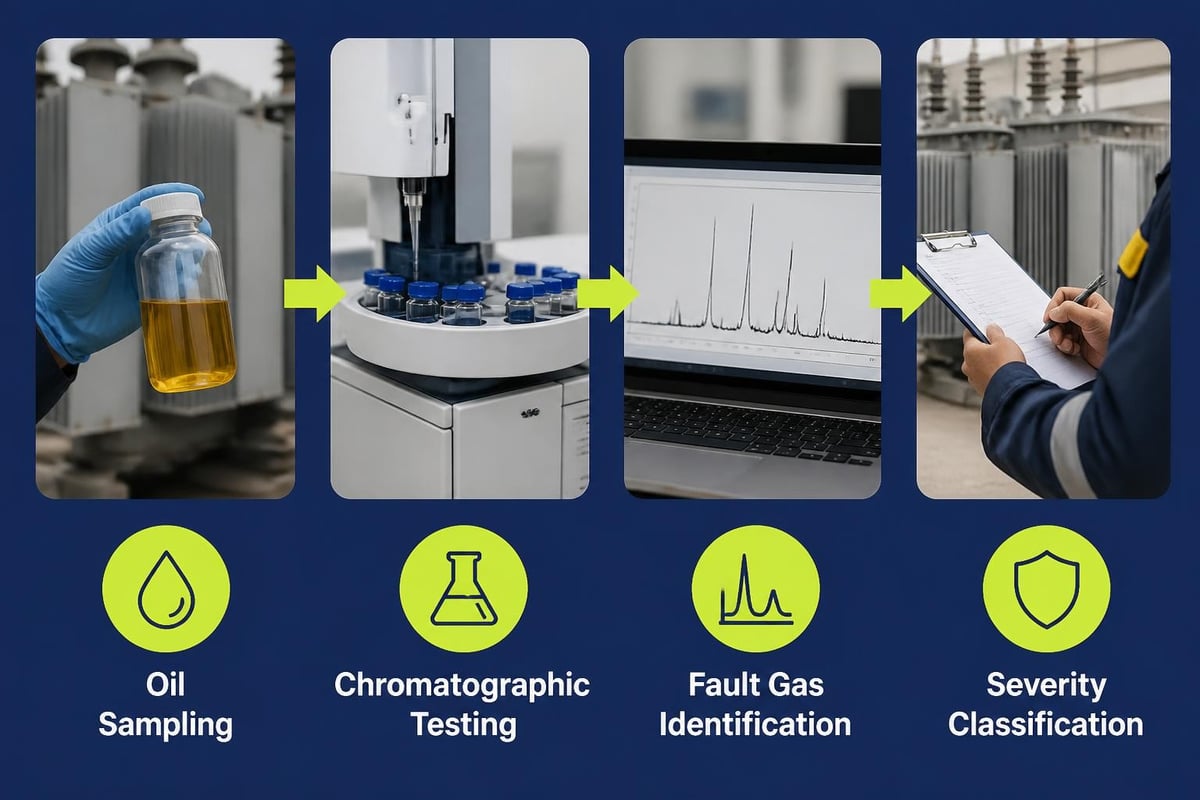
Before undertaking physical repairs, comprehensive diagnostic testing establishes baseline conditions and identifies specific failure mechanisms. Dissolved gas analysis (DGA) reveals internal fault activity through characteristic gas ratios, with recent research on gas production patterns improving interpretation accuracy for repair prioritization decisions.
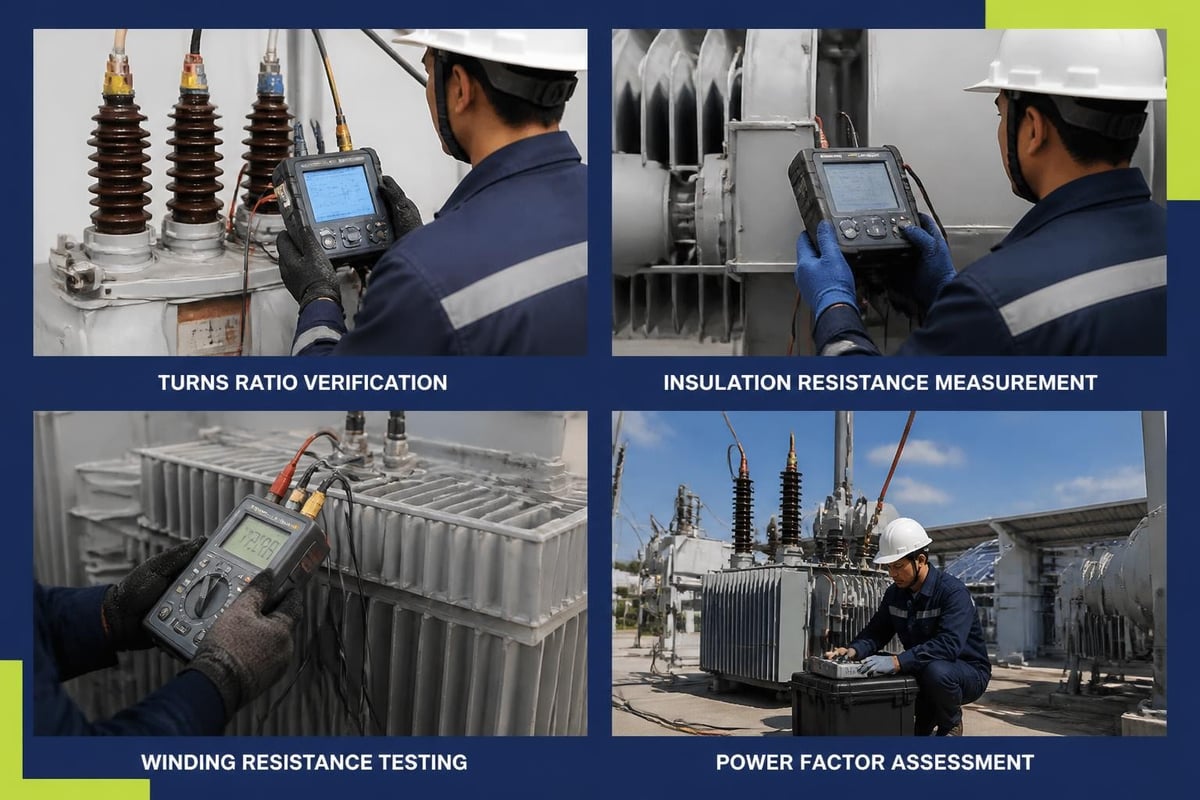
Electrical testing protocols form the foundation of condition assessment. Power factor and capacitance measurements detect insulation degradation, moisture contamination, and aging indicators. Transformer turns ratio testing confirms winding integrity and identifies shorted turns or incorrect tap positions. Insulation resistance measurements using megohm meters or high-voltage testers establish baseline values for trending analysis.
Advanced diagnostics include frequency response analysis (FRA) to detect mechanical displacement, winding deformation, or core movement following through-fault events. Partial discharge testing identifies localized insulation weakness before catastrophic failure occurs. The IEEE Transformers Committee provides ongoing guidance on emerging diagnostic methodologies and interpretation criteria.
Oil Processing and Fluid Management Services
Transformer oil serves dual roles as electrical insulation and cooling medium, making its condition critical to overall transformer health. Professional transformer repair services include comprehensive oil management programs that extend transformer life and prevent premature failures.
Oil Purification and Reclamation
Oil purification removes moisture, dissolved gases, and particulate contamination through vacuum dehydration and filtration processes. Mobile processing units can restore oil dielectric strength on-site, eliminating the need for complete oil replacement in many scenarios. The process typically reduces moisture content below 10 parts per million (ppm) and removes particles above 5 microns.
Oil reclamation goes beyond simple purification by removing oxidation products, acidic compounds, and soluble degradation products through specialized adsorbent media. This process can restore severely degraded oil to near-new specifications, representing significant cost savings compared to complete oil replacement while maintaining transformer reliability.
| Oil Condition Parameter | New Oil Specification | Acceptable In-Service | Requires Treatment |
|---|---|---|---|
| Dielectric Strength (kV) | >30 | >25 | <25 |
| Water Content (ppm) | <5 | <15 | >20 |
| Acidity (mg KOH/g) | <0.03 | <0.2 | >0.25 |
| Interfacial Tension (mN/m) | >40 | >25 | <22 |
Oil Sampling and Analysis Programs
Regular oil sampling establishes trending data that informs maintenance decisions and identifies developing problems before they escalate. Qualified technicians collect samples using proper techniques to avoid atmospheric contamination and ensure representative results. Laboratory analysis includes both routine parameters-dielectric strength, moisture, acidity-and specialized tests such as furan analysis for paper insulation degradation assessment.
The CIGRE Guide for Transformer Maintenance provides internationally recognized protocols for sampling frequency, analysis parameters, and interpretation criteria that inform repair versus replacement decisions.
On-Site Repair Capabilities
Modern transformer repair services increasingly emphasize on-site interventions that minimize downtime and transportation risks. Mobile service vehicles equipped with specialized tools, test equipment, and consumable materials enable technicians to perform complex repairs without removing transformers from service locations.
On-site repair advantages include:
- Eliminated transportation costs and logistics
- Reduced downtime through rapid response
- Minimized handling damage risks
- Preservation of existing mounting and connections
- Immediate post-repair energization capability
On-site capabilities typically encompass bushing replacement, gasket renewal, tap changer servicing, cooling system repair, and oil processing. More extensive interventions-such as core and coil work-generally require workshop facilities with overhead lifting capacity, climate-controlled environments, and specialized machinery.
Workshop Repair and Refurbishment Services
When transformers require extensive intervention, workshop-based transformer repair services provide controlled environments with specialized equipment for complete disassembly, inspection, and rebuilding. These facilities handle everything from routine maintenance overhauls to complete reconstructions following catastrophic failures.
Major Overhaul Procedures
Complete overhaul programs systematically address all transformer subsystems. The process begins with tank drainage and internal component extraction. Core and coil assemblies undergo detailed inspection under clean, dry conditions. Windings receive insulation resistance testing, turns ratio verification, and visual examination for mechanical damage or thermal degradation.
Replacement of all consumable components represents standard practice during major overhauls. New gaskets, bushings, gauges, and relief devices ensure reliable operation for the next service interval. Tap changers receive complete disassembly with contact replacement, mechanism lubrication, and drive motor refurbishment. Core clamping structures undergo retightening to manufacturer specifications.
Tank interiors receive thorough cleaning and inspection. Internal surfaces may require repainting with specialized coatings to prevent corrosion. External surfaces get prepared and refinished to restore weather protection and appearance. The IEEE C57.150 standard provides detailed guidance on maintenance practices and repair procedures used throughout the industry.
Life Extension Programs
Strategic refurbishment programs can extend transformer service life by decades beyond original design expectations. These initiatives combine comprehensive diagnostics, targeted component upgrades, and systematic repairs to address age-related degradation while maintaining or improving original performance specifications.
Life extension strategies include:
- Complete winding reinsulation using modern materials
- Core reclamping and insulation renewal
- Cooling system capacity upgrades
- Tap changer replacement with modern designs
- Control and protection system modernization
- Sealing system improvements to reduce moisture ingress
The CIGRE Technical Brochure on life extension presents detailed economic analysis frameworks and risk assessment methodologies that guide investment decisions around major refurbishment versus replacement alternatives.
Compliance and Testing Standards
Professional transformer repair services operate within established regulatory frameworks and industry standards that ensure safety, reliability, and performance verification. Understanding these requirements helps facility managers evaluate service provider qualifications and verify deliverable quality.
Acceptance Testing Requirements
Following any significant repair, comprehensive acceptance testing validates work quality and confirms the transformer meets performance specifications. The ANSI/NETA MTS-2023 standard defines field maintenance testing specifications widely recognized across North America for both acceptance and routine maintenance testing protocols.
Testing sequences typically include insulation resistance measurements, power factor testing, turns ratio verification across all tap positions, winding resistance measurements, and oil dielectric strength verification. For larger units, excitation current testing and frequency response analysis provide additional assurance of internal integrity. Documentation packages should include calibration certificates for all test equipment, detailed measurement records, and comparison against baseline or factory test values.
Regulatory and Reliability Requirements
Utility-scale installations and critical facility transformers operate under regulatory oversight that mandates periodic testing and documented maintenance programs. The NERC PRC-005 supplementary reference outlines reliability requirements affecting maintenance, testing, and repair programs for power system equipment including transformers serving bulk electric systems.
Compliance programs require documented procedures, qualified personnel, calibrated test equipment, and comprehensive record-keeping. Many facilities incorporate condition-based maintenance approaches that use diagnostic testing results to optimize intervention timing while meeting minimum regulatory testing frequencies.
Emergency Repair and Rapid Response
Unexpected transformer failures demand immediate response to minimize downtime and prevent extended outages. Professional transformer repair services maintain emergency response capabilities with on-call technicians, mobile service units, and rental transformer inventories that bridge the gap during extended repairs.
Emergency protocols begin with rapid fault assessment to determine failure severity and feasible repair options. For catastrophic failures involving internal arcing or fire damage, on-site repair may prove impossible, necessitating emergency replacement with rental units. For less severe faults-external bushing failures, cooling system problems, or control circuit issues-skilled technicians can often restore operation within hours.
Service providers offering 24/7 emergency response maintain relationships with rental equipment suppliers, ensuring access to properly rated temporary transformers when permanent units require extended workshop repair. This capability proves especially valuable for facilities without built-in redundancy where transformer outages directly impact production or critical loads.
Preventive Maintenance Integration
The most effective approach to transformer reliability combines periodic preventive maintenance with condition-based interventions informed by diagnostic testing. Professional repair services increasingly offer comprehensive maintenance programs that identify developing problems during early stages when intervention costs remain minimal and scheduling flexibility exists.
Scheduled Inspection Programs
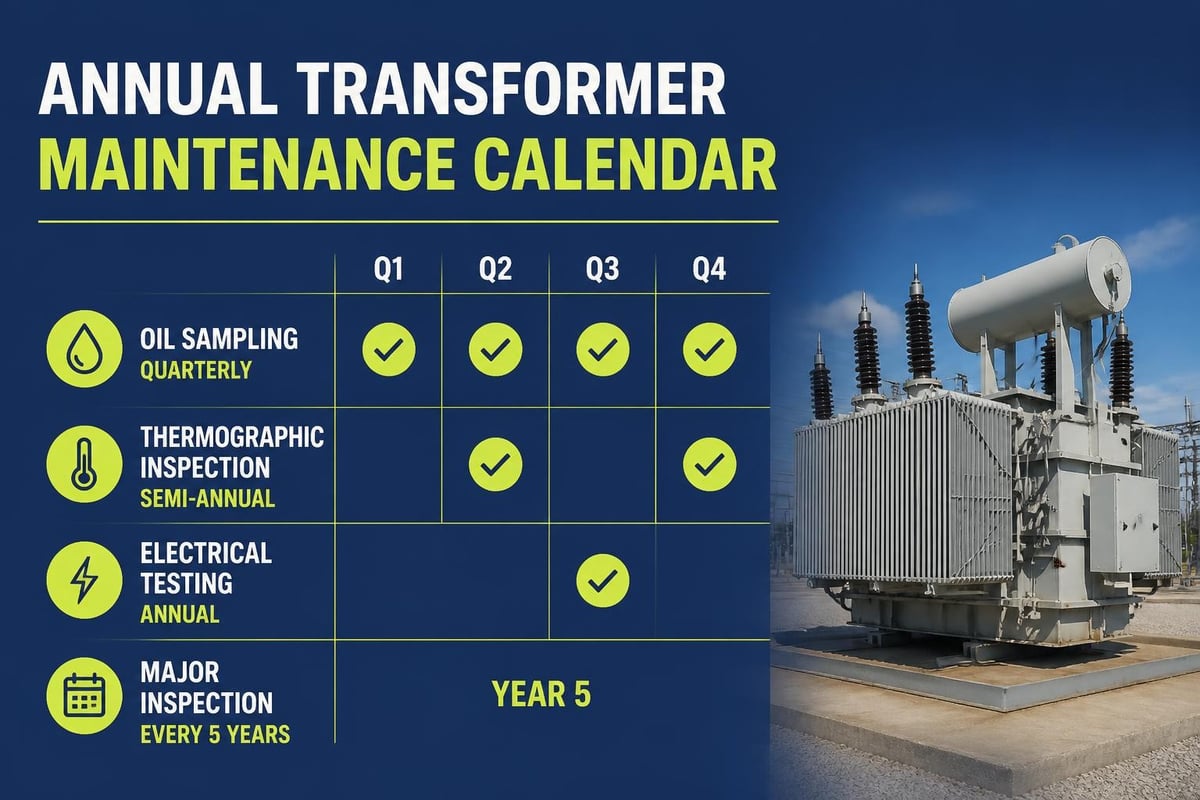
Regular inspection programs detect developing problems before they escalate into forced outages. Visual inspections identify oil leaks, cooling system operation, gauge readings, and external condition issues. Thermographic surveys reveal hotspots indicating high-resistance connections, cooling system blockages, or internal fault activity. Acoustic monitoring detects partial discharge activity and mechanical anomalies.
Inspection frequencies vary based on transformer criticality, operating environment, and historical performance. Critical units supporting essential loads may warrant monthly visual inspections and quarterly thermographic surveys, while less critical units operate on semi-annual or annual schedules. The key lies in establishing trending data that reveals gradual degradation patterns requiring proactive intervention.
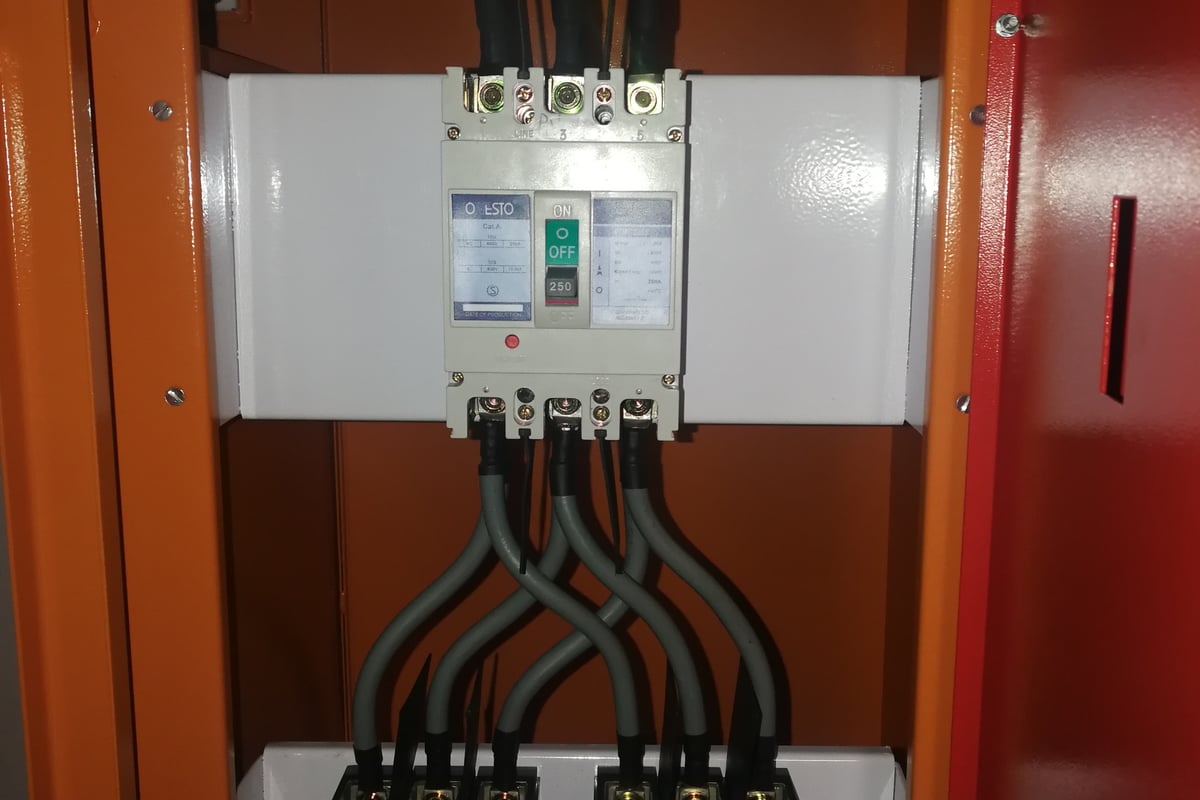
For facilities managing medium-voltage distribution infrastructure, professional Medium Voltage Switchgear and Transformers maintenance delivers comprehensive care that maximizes electrical grid reliability through integrated diagnostic testing and condition monitoring programs.
Predictive Maintenance Technologies
Advanced monitoring systems provide continuous condition assessment that enables truly predictive maintenance strategies. Online DGA monitors continuously track dissolved gas concentrations, immediately alerting operators to fault development. Temperature and load monitoring systems track thermal performance and identify cooling system degradation. Bushing monitoring detects deteriorating capacitance and power factor values indicating imminent failure.
These technologies shift maintenance paradigms from time-based schedules to condition-based interventions, optimizing resource allocation and minimizing unnecessary intrusive work while catching developing problems before they cause failures.
Selecting Qualified Service Providers
Choosing appropriate transformer repair services requires evaluating multiple factors beyond simple cost considerations. Provider qualifications, technical capabilities, response time commitments, and quality assurance processes all impact long-term reliability outcomes and total ownership costs.
Essential selection criteria include:
- Documented experience with specific transformer types and voltage classes
- Factory training certifications from major manufacturers
- Calibrated test equipment with current certification
- Quality management system compliance (ISO 9001 or equivalent)
- Insurance coverage adequate for transformer value and liability exposure
- References from facilities with similar equipment and requirements
Workshop facilities should provide climate-controlled environments, adequate lifting capacity, specialized machinery for core and coil work, and oil processing equipment. Mobile service capabilities enable rapid emergency response and routine on-site maintenance. Many facilities benefit from partnering with providers offering both capabilities, ensuring appropriate service delivery methods for each situation.
Technical expertise represents the most critical selection factor. Transformer repair demands deep understanding of electromagnetic theory, insulation systems, thermal management, and diagnostic interpretation. The best providers invest continuously in technician training, maintain relationships with equipment manufacturers, and participate in industry technical committees that develop standards and best practices.
Professional transformer repair services deliver essential capabilities for maintaining critical electrical infrastructure throughout its operational life. By combining advanced diagnostics, proven repair methodologies, and preventive maintenance strategies, facility managers can optimize transformer reliability while controlling total ownership costs. Whether you need emergency response for unexpected failures, scheduled maintenance programs, or strategic life-extension initiatives, ELECTRICAL4U(PTY)LTD brings over 20 years of specialized experience in low and medium-voltage transformer solutions across South Africa's residential and industrial sectors. Our comprehensive diagnostic capabilities and commitment to quality ensure your critical electrical assets maintain peak operational health and deliver the uptime your operations demand.