Finding qualified electricians near me residential services requires more than a quick online search. Homeowners face critical decisions about safety, compliance, and long-term reliability when electrical work is needed. Whether you're planning a kitchen renovation, installing EV charging equipment, upgrading an outdated panel, or troubleshooting persistent circuit issues, the electrician you choose directly impacts your family's safety and your property's value. This comprehensive guide walks you through every aspect of selecting, vetting, and working with residential electrical contractors in your area.
Understanding Residential Electrical Services
Residential electrical work encompasses a broad spectrum of projects, from simple outlet installations to complete home rewiring. Professional electricians handle everything from routine maintenance to complex system upgrades, ensuring your home meets current safety standards and accommodates modern electrical demands.
Common Residential Electrical Projects
When searching for electricians near me residential options, homeowners typically need assistance with several project types. Panel upgrades rank among the most common requests, particularly in older homes where 100-amp service no longer meets household demand. Modern homes with multiple HVAC systems, electric vehicle chargers, and smart home devices often require 200-amp or even 400-amp service.
Circuit additions and modifications address the need for dedicated circuits serving specific appliances or areas. Kitchen remodels, home offices, and outdoor entertainment spaces frequently require new circuits to handle increased loads safely. The National Electrical Code (NEC, NFPA 70) establishes minimum requirements for these installations, ensuring adequate capacity and proper protection.
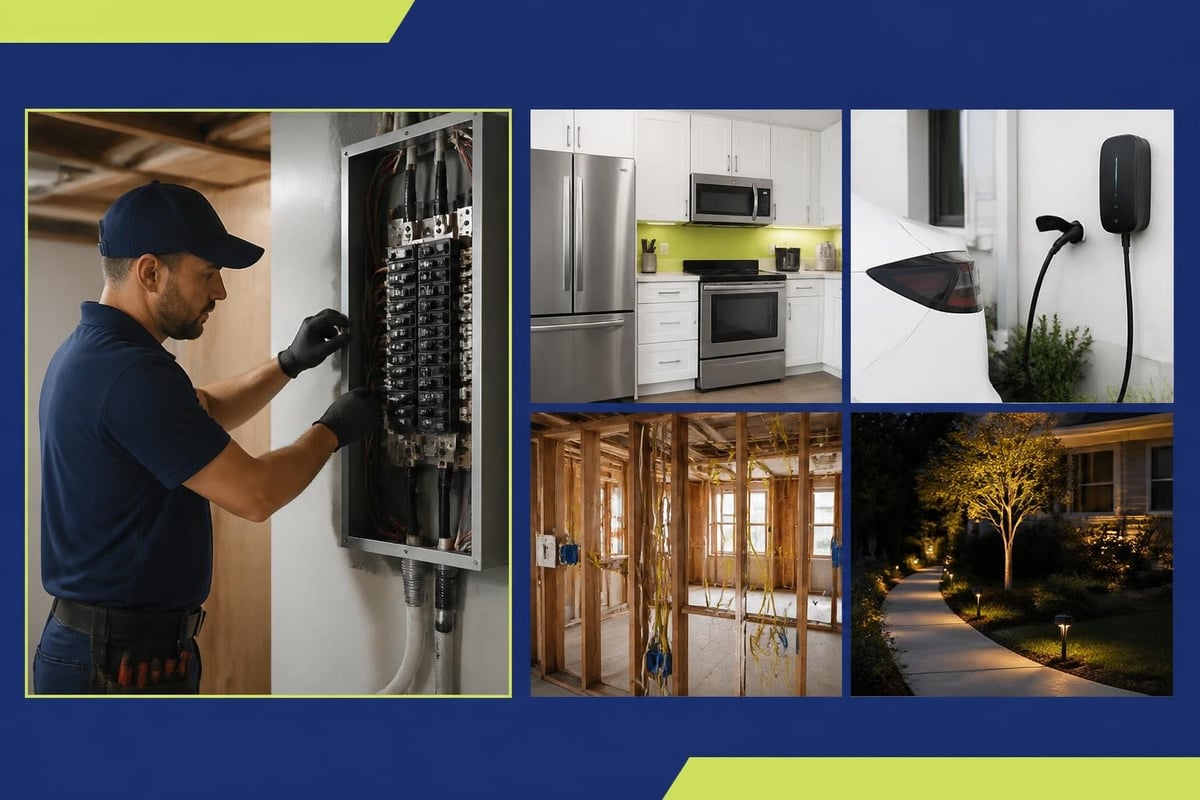
Lighting upgrades extend beyond simple fixture replacement. Recessed lighting installations, landscape lighting systems, and smart lighting integration require planning for proper load calculations, switch placement, and control systems. Many homeowners discover that outdated wiring cannot support modern LED dimming systems without modification.
Safety-Critical Electrical Work
Ground Fault Circuit Interrupter (GFCI) and Arc Fault Circuit Interrupter (AFCI) installations represent essential safety upgrades. According to Electrical Safety Foundation International (ESFI), these devices prevent electrocution and reduce fire risk significantly. Modern code requires GFCI protection in bathrooms, kitchens, garages, and outdoor areas, while AFCI protection is mandated for most living spaces.
Whole-house surge protection shields sensitive electronics from voltage spikes caused by lightning strikes, utility switching, and large appliance cycling. Professional electricians install these devices at the main panel, providing protection that portable surge strips cannot match.
Vetting Electricians Near Me Residential Services
The process of selecting a qualified electrical contractor demands careful evaluation of credentials, experience, and business practices. Professional standards vary significantly across providers, making thorough vetting essential for project success.
Licensing and Certification Requirements
Valid licensing stands as the primary indicator of professional competence. Electrical contractors must hold appropriate licenses for the jurisdiction where they work, demonstrating they've met education requirements, passed examinations, and maintain current knowledge of electrical codes. Verify licenses through your local licensing board or municipal building department.
Insurance coverage protects both the contractor and the homeowner. Liability insurance covers property damage and injuries occurring during the project, while workers' compensation protects employees injured on your property. Request certificates of insurance and verify coverage amounts meet your project's scope.
| Credential Type | What It Means | How to Verify |
|---|---|---|
| Master Electrician License | Highest level of certification; can design, install, and supervise | State licensing board |
| Journeyman License | Qualified to perform electrical work under supervision | State licensing board |
| Liability Insurance | Protects against property damage and injuries | Certificate of Insurance from carrier |
| Workers' Compensation | Covers employee injuries on your property | Certificate from insurance carrier |
| Bonding | Financial guarantee of work completion | Bonding company verification |
Evaluating Experience and Specialization
Not all electricians possess equal expertise in residential work. Commercial and industrial electricians work with different voltage systems, equipment, and code requirements than residential specialists. When searching for electricians near me residential contractors, prioritize those with substantial single-family and multi-family experience.
Request references from recent projects similar to yours in scope and complexity. A contractor experienced in service upgrades may lack expertise in low-voltage systems, smart home integration, or solar installations. Consumer Reports guidance on finding qualified tradespeople emphasizes matching contractor expertise to project requirements.
Years in business indicate stability and customer satisfaction. Established contractors maintain relationships with suppliers, inspectors, and other trades, facilitating smoother project execution. However, newer contractors may offer competitive pricing and hunger to build reputation through excellent service.
Getting Accurate Quotes and Estimates
Transparent pricing requires detailed project scope definition. Vague descriptions lead to misunderstandings, change orders, and budget overruns. The best electricians near me residential services provide comprehensive written estimates breaking down labor, materials, permits, and associated costs.
What Professional Estimates Should Include
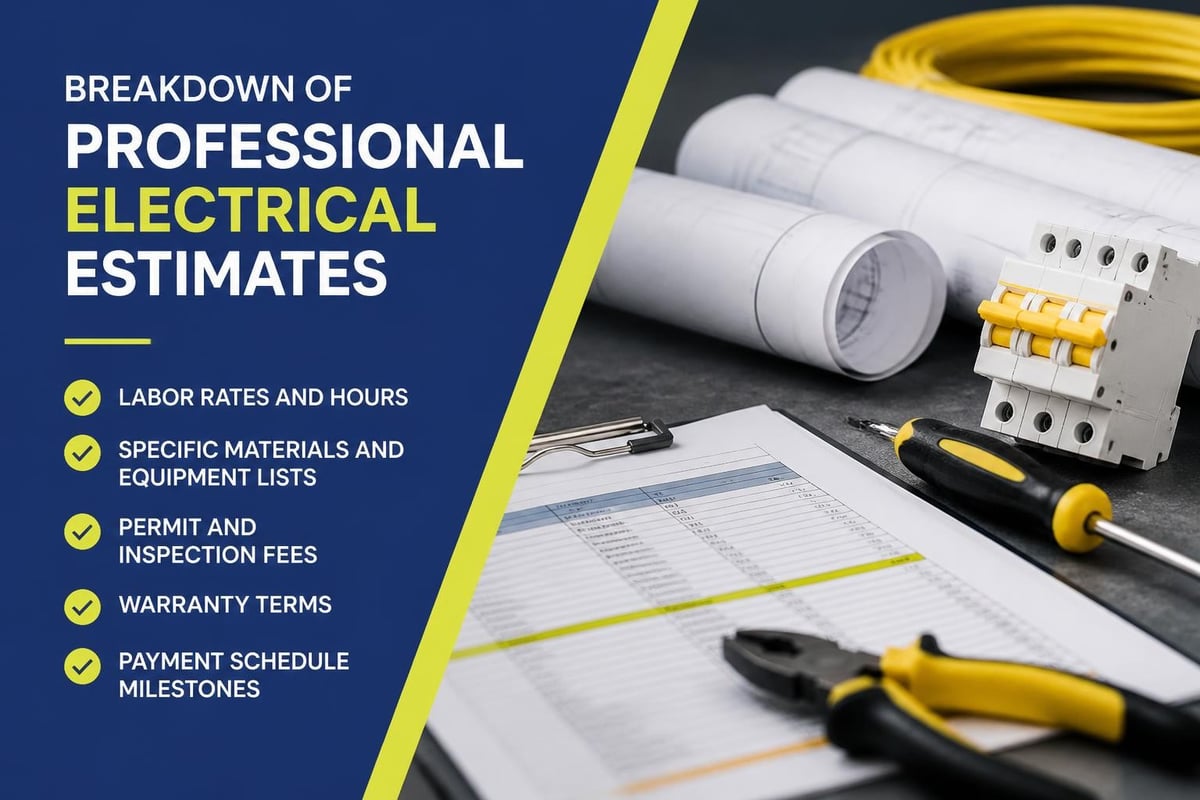
Detailed estimates itemize each project component. Labor costs should specify hourly rates or flat fees for defined tasks. Materials should list specific products, brands, and quantities. Permit fees vary by jurisdiction and project type; contractors typically handle applications but pass costs to homeowners.
Time estimates set realistic expectations. Simple outlet additions may take hours, while panel upgrades require full days. Reputable contractors build buffer time for unexpected complications, ensuring they don't rush work to meet unrealistic schedules.
Payment terms outline deposit requirements, progress payments, and final payment conditions. Standard practice involves a deposit (typically 10-30% depending on material costs), progress payments tied to completion milestones, and final payment upon inspection approval and project completion.
- Request written estimates from at least three contractors to establish market pricing
- Compare scope of work, not just bottom-line numbers to ensure apples-to-apples comparison
- Ask about warranty coverage on labor and materials
- Clarify what happens if hidden problems emerge during the project
- Verify all permits, inspections, and cleanup are included in the quoted price
Red Flags When Comparing Quotes
Significantly low bids often indicate corners being cut. Unlicensed contractors, substandard materials, or skipped permit processes artificially reduce costs but create liability and safety risks. Extremely high quotes may reflect premium service or simply inflated pricing; ask for justification of costs that exceed market averages by more than 20%.
Pressure tactics suggest unprofessional business practices. Legitimate contractors provide estimates and allow time for consideration. Those demanding immediate decisions or large upfront deposits warrant skepticism. Cash-only payment requests eliminate paper trails and suggest tax avoidance or lack of business legitimacy.
Permits, Inspections, and Code Compliance
Legal electrical work requires permits for most projects beyond simple repairs. International Code Council (ICC) consumer safety resources explain why permits and inspections protect homeowners by ensuring work meets minimum safety standards and receives independent verification.
When Permits Are Required
Permit requirements vary by jurisdiction, but generally apply to:
- Panel upgrades or replacements
- New circuit installations
- Service entrance modifications
- Permanently installed appliance circuits
- Whole-house generator installations
- EV charger installations with dedicated circuits
- Major rewiring projects
Simple repairs, fixture replacements, and device swaps (switches, outlets) typically don't require permits. However, regulations differ locally, so verify requirements with your building department. Professional electricians near me residential contractors know local requirements and handle applications as part of their service.
The Inspection Process
Electrical inspectors verify work meets code requirements before concealment and energization. Rough-in inspections occur after wiring installation but before walls close, allowing inspectors to verify proper cable routing, support, protection, and connections. Final inspections happen after all devices, fixtures, and equipment are installed and the system is operational.
Failed inspections delay projects and increase costs. International Association of Electrical Inspectors (IAEI) resources explain common deficiencies inspectors cite, helping homeowners understand what inspectors evaluate. Qualified contractors rarely fail inspections due to their code knowledge and attention to detail.
Specialized Residential Electrical Projects
Modern homes demand expertise beyond traditional wiring. Electric vehicle charging, solar integration, and smart home systems require specialized knowledge that not all residential electricians possess.
EV Charger Installation
Electric vehicle ownership requires home charging infrastructure. Level 1 charging uses standard 120-volt outlets but charges slowly (3-5 miles of range per hour). Level 2 charging requires 240-volt circuits, similar to electric dryers or ranges, and delivers 25-40 miles of range per hour.
Professional installation ensures adequate electrical capacity, proper circuit protection, and code-compliant installation. Many homes require panel upgrades to accommodate 40-50 amp circuits needed for Level 2 chargers. Location matters too-chargers must be weatherproof if installed outdoors and positioned for convenient vehicle access.
Energy-efficient EV supply equipment features like load management and smart scheduling optimize energy use and reduce costs. Qualified electricians help homeowners select appropriate equipment and ensure installations meet manufacturer specifications and local codes.
Solar and Battery Integration
Residential solar installations require coordination between solar installers and electrical contractors. While solar companies often handle complete installations, homeowners working with separate providers need electricians experienced in DC systems, inverter connections, and utility interconnection requirements.
For homeowners seeking to optimize energy consumption and reduce waste, professional assessment of electrical loads becomes critical. Power quality issues often go undetected without proper diagnostic equipment and expertise. Addressing inefficiencies through power factor correction and load balancing can significantly reduce energy costs while improving system reliability.

Battery backup systems add complexity through additional disconnects, charge controllers, and critical load panels. These systems allow specific circuits to run during grid outages while non-essential loads remain offline, maximizing battery runtime.
Questions to Ask Before Hiring
Thorough contractor vetting requires asking pointed questions that reveal professionalism, competence, and compatibility. Don't hesitate to probe deeply-your safety and investment depend on making the right choice.
Essential Pre-Hire Questions
How long have you been performing residential electrical work specifically? This distinguishes residential specialists from contractors primarily serving commercial or industrial clients. Follow up by asking what percentage of their business is residential and what types of projects they handle most frequently.
Can you provide references from projects similar to mine? Contact references and ask about timeliness, cleanliness, communication, problem-solving, and overall satisfaction. Recent references matter more than those from years ago.
What warranties do you offer on labor and materials? Standard practice includes one-year labor warranties and pass-through manufacturer warranties on equipment. Longer warranties indicate confidence in workmanship.
How do you handle unexpected issues discovered during the project? Professional contractors stop work, document problems, and present options with cost implications before proceeding. This prevents surprise bills and demonstrates integrity.
Will you obtain all necessary permits and schedule inspections? The answer should be an unequivocal yes, with permit costs included in the estimate.

Understanding Contractor Communication
Communication styles impact project satisfaction significantly. Some contractors prefer text messaging, others phone calls, and some email. Establish communication preferences and response time expectations upfront. Professional contractors respond within 24 hours to non-emergency inquiries and provide regular project updates.
Availability affects scheduling flexibility. Busy contractors may have weeks-long backlogs, while readily available ones might lack steady work for concerning reasons. Balance schedule needs against contractor quality-waiting for the right contractor often proves worthwhile.
Working With Your Electrician
Successful projects require homeowner preparation and cooperation. Simple steps facilitate efficient work and prevent misunderstandings.
Preparing Your Home
Clear work areas before the crew arrives. Remove furniture, decorations, and valuables from rooms where work occurs. Provide clear pathways to electrical panels, attics, crawl spaces, and other work areas.
Secure pets to prevent escapes and interactions with workers. Inform contractors about pets even if secured-some technicians have allergies or phobias affecting their ability to work comfortably.
Designate parking areas for contractor vehicles and equipment. Service vehicles often carry expensive tools and materials requiring secure, nearby parking. Restricting contractors to street parking blocks away demonstrates lack of consideration and may slow work.
During the Project
Establish a single point of contact for questions and decisions. Multiple family members providing conflicting direction creates confusion and delays. Designate one person to communicate with the contractor about changes, concerns, and approvals.
Document everything. Photograph work areas before, during, and after completion. Keep copies of all agreements, change orders, permits, and invoices. These records prove invaluable if disputes arise or future owners need work history.
Respect contractors' work schedules. Constant interruptions for conversation or unrelated questions reduce productivity. Save non-urgent questions for scheduled check-ins or end-of-day discussions.
Final Walkthrough and Payment
Conduct thorough final walkthroughs before releasing final payment. Test all new outlets, switches, and equipment. Verify cleanup meets expectations-professional contractors remove debris, vacuum work areas, and leave spaces cleaner than found.
Obtain copies of inspection approvals, warranties, and as-built diagrams showing new circuit locations. These documents protect future home values and guide subsequent electrical work.
Release final payment only after complete satisfaction with work quality, inspection approval, and documentation delivery. This leverage ensures contractors address any deficiencies promptly.
Emergency Services and Ongoing Maintenance
Relationships with electricians near me residential contractors shouldn't end at project completion. Establishing ongoing relationships provides peace of mind when urgent issues arise.
Recognizing Electrical Emergencies
True emergencies require immediate professional response:
- Burning smells from outlets, switches, or panels
- Sparking or arcing at electrical connections
- Outlets or switches hot to the touch
- Frequent circuit breaker trips
- Flickering lights throughout the house (not just one fixture)
- Buzzing sounds from the electrical panel
Non-emergency issues like single outlet failures or individual circuit problems can wait for regular business hours. Understanding this distinction prevents unnecessary after-hours service charges.
Preventive Maintenance Value
Annual electrical inspections identify developing problems before they cause failures or hazards. Thermal imaging reveals hot connections invisible to visual inspection. Tightening connections, cleaning panels, and testing safety devices extend equipment life and maintain safety.
Service agreements with local contractors often include priority scheduling, discounted rates, and periodic safety inspections. For homeowners with older electrical systems or critical home office equipment, these agreements provide valuable protection and peace of mind.
Technology and Modern Electrical Systems
Smart home technology integration demands electricians comfortable with low-voltage systems, network infrastructure, and digital controls. Traditional wiring knowledge alone doesn't prepare contractors for modern automation systems.
Smart Home Electrical Requirements
Whole-home automation requires neutral wires at switch locations, which many older homes lack. Smart switches need continuous power even when lights are off. Retrofitting neutral wires involves fishing new cables through walls-complex work requiring experience and proper tools.
Dedicated circuits for network equipment prevent internet outages during power events. Uninterruptible power supplies (UPS) protect routers, modems, and smart home hubs, but require proper electrical supply.
Load management systems automatically reduce demand during peak pricing periods or approach service capacity limits. These systems require compatible panels, smart breakers, and proper programming-capabilities not all residential electricians offer.
Future-Proofing Your Electrical System
Oversizing conduit during renovations simplifies future upgrades. Running larger conduit than currently needed costs little more but allows pulling additional circuits later without opening walls.
Whole-house wiring standards evolve constantly. Cat6 network cabling, fiber optic runs, and dedicated circuits for home offices represent forward thinking that increases property value and functionality. Electricians near me residential contractors experienced with modern building practices help homeowners invest wisely in infrastructure that serves current needs while accommodating future technologies.
| Future-Proofing Strategy | Current Cost Impact | Long-Term Benefit |
|---|---|---|
| Oversized electrical panel (200A vs 150A) | 15-25% premium | Eliminates future panel replacement |
| Conduit for future circuits | Minimal ($50-200) | Avoids opening walls for additions |
| Structured wiring system | Moderate ($500-1500) | Supports evolving technology needs |
| EV circuit pre-wiring | Low ($200-400) | Reduces future installation cost 60% |
| Whole-home surge protection | Low ($300-600) | Protects thousands in electronics |
Building Long-Term Contractor Relationships
Finding excellent electricians near me residential services justifies effort to maintain those relationships. Reliable contractors become trusted advisors for home improvement decisions, safety concerns, and emergency situations.
Provide feedback after projects-positive reviews help contractors build business while constructive criticism improves service. Local businesses rely heavily on reputation; your testimonial carries significant weight with future customers.
Regular maintenance calls keep you top-of-mind with contractors. Even simple annual inspections maintain relationships and ensure priority scheduling when urgent needs arise. Contractors remember customers who provide consistent, pleasant business.
Referrals strengthen relationships while helping friends and neighbors find qualified professionals. Contractors appreciate referrals and often reward them with priority service or modest discounts. Building mutual value creates partnerships lasting decades.
Selecting the right residential electrician requires evaluating credentials, comparing detailed quotes, and establishing clear communication from the start. Whether your project involves routine upgrades, specialized installations like EV chargers, or comprehensive system improvements, working with qualified professionals ensures safety, compliance, and lasting value. ELECTRICAL4U(PTY)LTD brings over 20 years of electrical expertise to residential and industrial projects across South Africa, delivering comprehensive solutions from solar installations to power system optimization with professional service you can trust.